Plastic shrinkage
Surface water evaporates faster than bleed water rises while the concrete is still plastic.
Shallow crazing or short parallel cracks on fresh slabs, appearing within hours of casting.
Cosmetic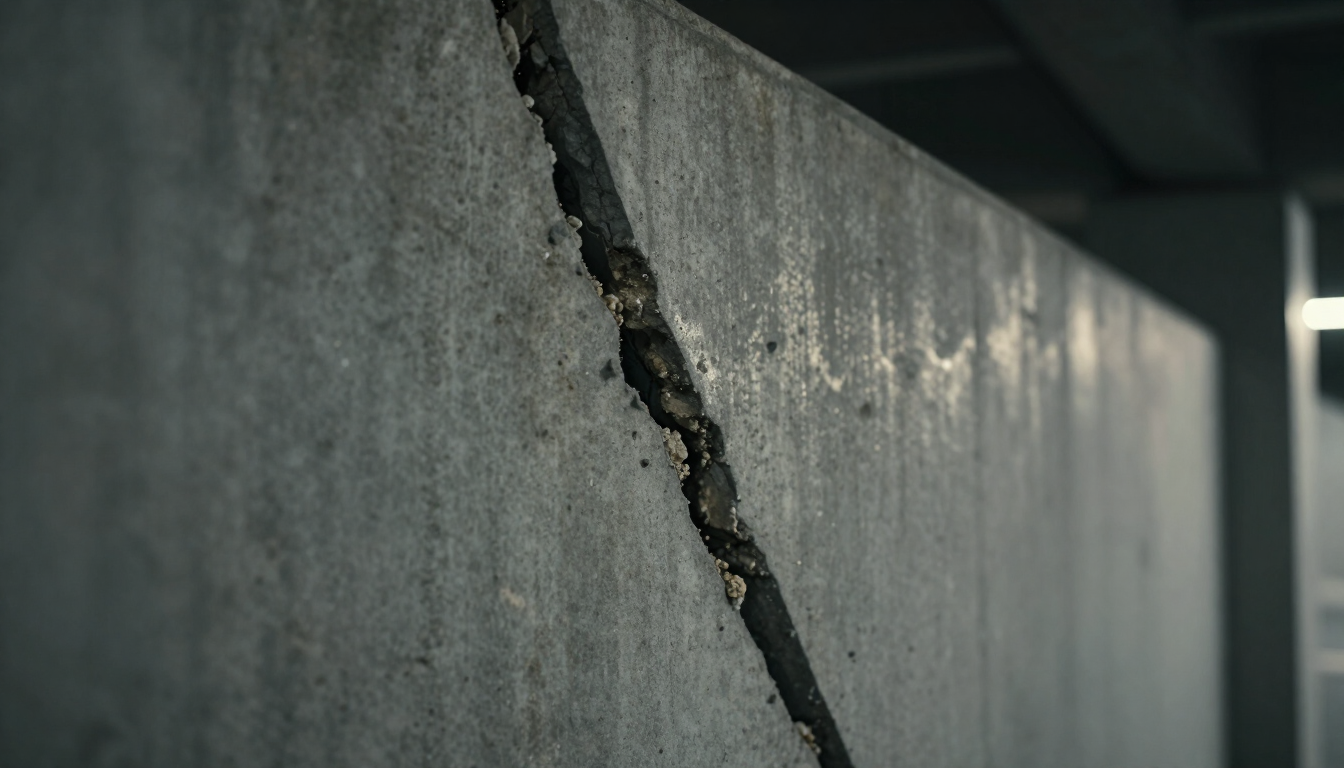
AI concrete forensics — field tool
Upload a photo of cracked concrete and CrackScope reads the pattern like a forensic engineer — classifying the crack, ranking the likely causes of failure, and telling you how worried to be.
01 — The tool
Drop in a close-up of the crack, add what you know about the element, and get a structured failure report in under a minute.
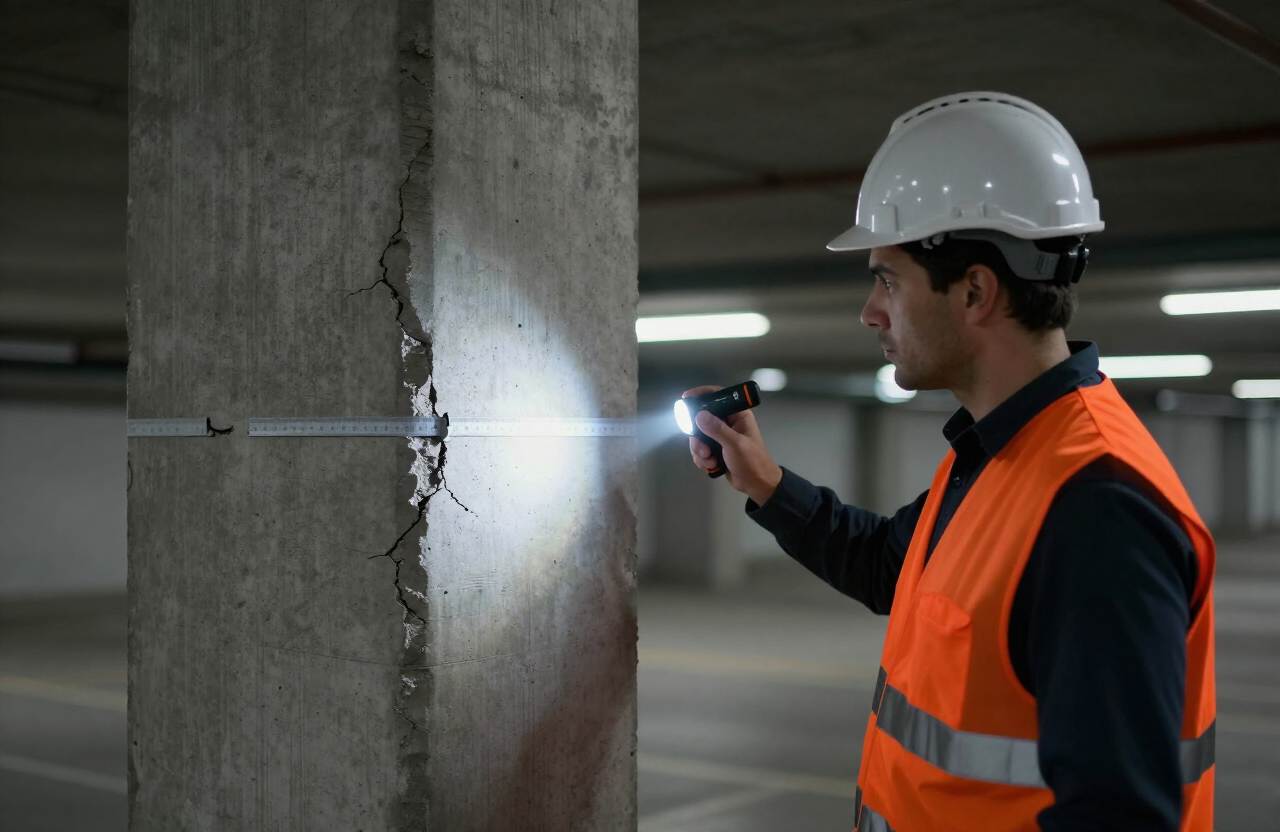
Field capture — crack-width gauge, unit C-14
02 — Method
01
Fill the frame with the crack and a hand-width of surrounding surface. Raking light — sun or a flashlight held low — makes shallow cracks legible.
02
Element, age, and exposure sharpen the reading. The same diagonal crack means shrinkage on a week-old slab and something far more serious on a ten-year-old beam.
03
Pattern classification, ranked causes with confidence, a severity call, and the next steps a forensic engineer would take — streamed back in under a minute.
03 — Reference
Eight mechanisms account for most cracked concrete you will ever photograph. The analyzer weighs the same evidence — pattern, position, staining, age.
08 entries
Surface water evaporates faster than bleed water rises while the concrete is still plastic.
Shallow crazing or short parallel cracks on fresh slabs, appearing within hours of casting.
CosmeticLong-term moisture loss contracts the paste against restraint from rebar, subgrade, or adjacent pours.
Fine, evenly spaced cracks across restrained slabs and walls, often perpendicular to reinforcement.
MonitorSoil consolidation, washout, or inadequate bearing lets part of the structure drop.
Wide diagonal cracks, frequently stepped through joints, with one side visibly lower than the other.
StructuralRestrained expansion and contraction from temperature swings and heat of hydration.
Vertical cracks at regular intervals along long walls, often near openings or changes in section.
MonitorChlorides or carbonation break passivity; expanding rust jacks the cover off the bar.
Cracks running straight along rebar lines, with rust staining, spalling, and delaminated cover.
StructuralAlkalis in the cement react with reactive aggregate, forming an expansive gel over years.
Random map cracking with dark gel exudation, worst in areas that stay damp.
StructuralSaturated concrete freezes; expanding pore water fractures the surface layer by layer.
Surface scaling and parallel cracks near exposed edges, joints, and splash zones.
MonitorApplied loads exceed the capacity the section was designed and detailed for.
Flexural cracks at mid-span or diagonal shear cracks near supports of beams and slabs.
StructuralField-ready
Sixty seconds from photo to a ranked list of probable causes — before you decide whether to monitor it, seal it, or call an engineer.
Analyze it nowIndicative analysis only — not a substitute for a structural engineer